A few years ago, making a good video ad meant hiring a camera crew, booking a studio, waiting weeks for edits, and spending a fortune. For a small business, that was often out of reach, so many just skipped video altogether.
Today, things look very different. With AI video advertising, a shop owner in a small town can create a polished, professional video in hours, sometimes minutes. It’s one of the biggest changes in advertising right now, and it’s worth understanding whether you run a business or market one.
Let’s break it down in plain language.
Table of Contents
What Is AI Video Advertising?
AI video advertising simply means using artificial intelligence tools to help plan, create, edit, or improve video ads. The AI doesn’t replace creativity. It takes over the slow, repetitive parts so people can focus on ideas.
Here’s what AI can help with today:
- Writing scripts from a short brief
- Generating voiceovers in different languages and tones
- Creating visuals and animations without filming everything from scratch
- Editing footage, adding captions, and resizing for Instagram, YouTube, or Facebook
- Testing different versions of an ad to see which performs best
Think of AI as a very fast assistant. It does the groundwork, and you give the direction.
Why Video Matters So Much Right Now
People scroll fast. In those first two or three seconds, they decide whether to stop or move on. Video grabs attention far better than static images or plain text, which is why Reels, Shorts, and in-feed videos dominate our phones.
For businesses in India, this matters even more. Millions of people watch videos daily on mobile, often in Hindi and regional languages. A short, relatable video can build trust faster than any banner ever could.
The problem was always cost and time. AI solves exactly that.
The Real Benefits of AI Video Advertising (Beyond the Hype)
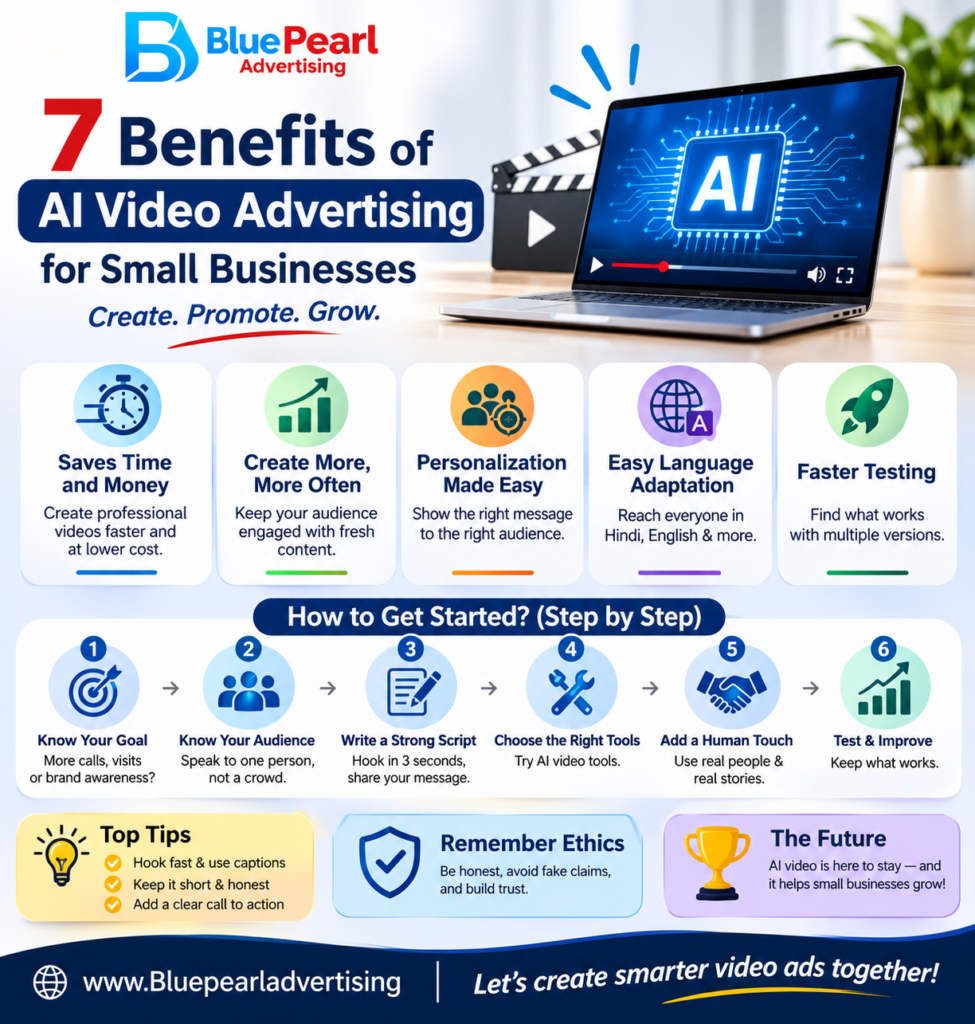
1. It Saves Time and Money
A traditional ad shoot can cost anywhere from a few thousand to several lakh rupees. AI tools can cut that dramatically. You still need a good idea, but production becomes far lighter.
2. You Can Create More, More Often
Consistency wins on social media. Brands that post fresh video regularly stay in people’s minds. With AI, producing ten variations of one ad is realistic, not a dream.
3. Personalization Becomes Possible
Imagine showing a slightly different version of your ad to different audiences: one for young college students, another for working parents. AI makes this kind of tailoring affordable, even for small businesses.
4. Easy Language Adaptation
You can adapt the same ad into Hindi, English, or other languages without reshooting. For a business serving a diverse state like Uttar Pradesh, that’s a big advantage.
5. Faster Testing
Instead of guessing which ad will work, you can run a few versions, check the results, and put your budget behind the winner. Less guessing, less wasted spend.
Where AI Video Falls Short
Let’s be honest. AI isn’t perfect, and pretending it is would be misleading.
- It can feel generic. If everyone uses the same tools and styles, ads start looking alike.
- Emotion is hard to fake. Real stories, real faces, and real customers still connect more deeply.
- Mistakes happen. AI can produce odd visuals, wrong details, or awkward voice tones. A human must always review the final output.
- Trust matters. Audiences are getting smarter. If an ad feels fake or misleading, people notice, and trust drops quickly.
The smartest approach is a mix: AI for speed, humans for soul.
How to Get Started (Step by Step)
You don’t need to be a tech expert. Here’s a simple way to begin.
Step 1: Know your goal. Do you want more calls, more store visits, or more brand awareness? One clear goal makes a better ad.
Step 2: Know your audience. Who are you talking to, and what do they care about? Speak to one person, not a crowd.
Step 3: Write a short, strong script. For social media, 15 to 30 seconds is often enough. Hook people in the first three seconds, share one main message, and end with a clear call to action.
Step 4: Choose your tools. Try a few AI video tools for scripting, visuals, voiceover, and editing. Start with free versions and see what feels comfortable.
Step 5: Add a human touch. Include a real photo of your shop, your team, or a happy customer. Authenticity beats perfection.
Step 6: Test and improve. Run two or three versions. Watch the numbers. Keep what works and drop what doesn’t.
Tips for Making AI Videos That Actually Work
- Hook fast. Ask a question or show something surprising right at the start.
- Use captions. Many people watch with the sound off.
- Keep it short. One idea per video is enough.
- Be honest. Don’t promise what you can’t deliver.
- Match your brand. Colors, tone, and style should feel like you.
- Add a clear call to action. Tell people exactly what to do next: call, visit, or message.
A Quick Word on Ethics
As AI gets stronger, honesty becomes more important. Avoid fake testimonials, misleading claims, or using someone’s face or voice without permission. Following advertising rules and being transparent protects your brand and keeps your customers’ trust, which is far more valuable than any viral moment.
What’s Coming Next
AI video is moving fast. Soon we’ll likely see more realistic voices, smarter personalization, and tools that create full ad campaigns from a single idea. But even then, one thing won’t change: people respond to people. The brands that win will be the ones that use technology to tell more human stories, not fewer.
Final Thoughts
AI video advertising isn’t a threat to creativity. It’s a tool that gives small and growing businesses a chance to compete with bigger names. It lowers the cost, speeds up the process, and opens the door to smarter testing.
But tools alone don’t build brands. Good ideas do. Start small, stay honest, keep a human heart in your videos, and let AI handle the heavy lifting.
Want to bring video ads into your marketing but not sure where to begin? Blue Pearl Advertising Agency can help you plan, create, and promote ads that get noticed.



Leave a Reply