
Every day, we scroll through hundreds of online ads, yet the hoarding at a busy crossing, the jingle on the radio, or the front-page ad in the morning newspaper often stays with us longer. That is the quiet strength of traditional advertising. Digital marketing gets most of the attention today, but traditional advertising remains one of the most trusted and far-reaching ways to build a brand, especially in a diverse market like Uttar Pradesh.
Table of Contents
What Is Traditional Advertising?
Traditional advertising means promoting a product, service, or brand through offline channels that existed long before the internet. These channels reach people in their daily lives: at home, on the road, in markets, and at local events.
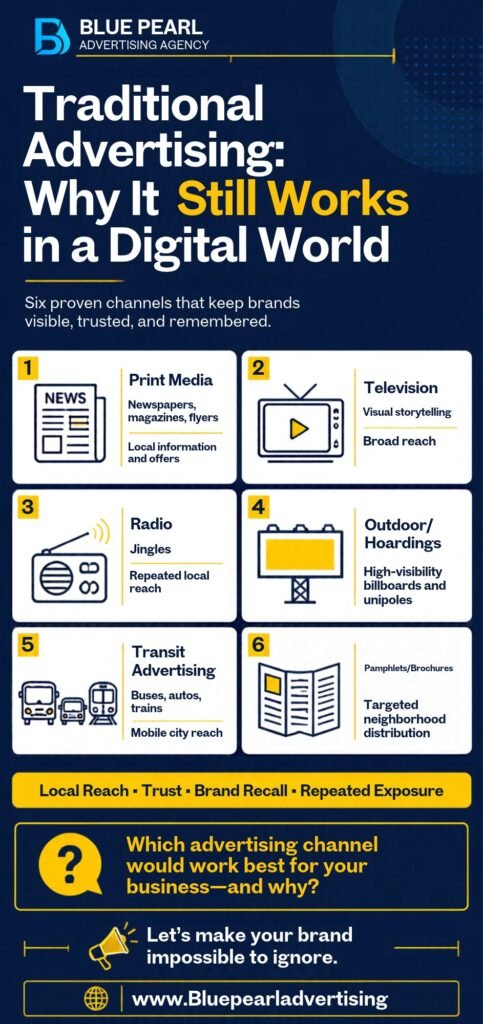
The main forms are:
- Print media: newspapers, magazines, brochures, pamphlets, and flyers
- Television: commercials, sponsorships, and local cable ads
- Radio: spots, jingles, and sponsored shows
- Outdoor advertising: hoardings, billboards, unipoles, bus shelters, and wall paintings
- Direct mail and handouts: letters, catalogues, and door-to-door distribution
- Transit advertising: ads on buses, autos, trains, and metro stations
Why Traditional Advertising Still Matters
1. Wide and Local Reach
Not everyone is on Instagram or YouTube all day. In many towns and villages across Uttar Pradesh, people still rely on newspapers, local radio, and wall advertising for information. Traditional media reaches older audiences, rural buyers, and people with limited internet access, groups that digital campaigns often miss.
2. Trust and Credibility
People tend to trust brands they see in newspapers, on television, or on large hoardings. An established media presence signals that a business is real, stable, and invested in its reputation. Online ads can feel temporary and easy to ignore, while a well-placed hoarding feels permanent.
3. Tangible Experience
A pamphlet in your hand, a magazine page you can flip through, or a banner you walk past creates a physical connection. This tactile quality makes the message feel more real and more memorable.
4. Less Clutter, Better Recall
Digital platforms are crowded. Users see ads constantly and often skip or block them. A single strong hoarding on a busy road competes with far fewer messages, which makes brand recall stronger.
5. Repeated Exposure Builds Familiarity
Someone who passes the same hoarding every day on their commute, hears the same radio jingle, and sees the same newspaper ad gradually starts to recognise and trust the brand. This repeated exposure is how many household names were built.
Types of Traditional Advertising in Detail
Newspaper and Magazine Ads
Newspapers remain powerful for local and regional promotion. Hindi and regional dailies have strong readership across Uttar Pradesh. They work well for announcements, sales, property launches, education admissions, and festive offers. Magazines suit more targeted audiences, such as fashion, business, or lifestyle readers.
Television Advertising
TV combines sound, visuals, and storytelling, making it ideal for emotional brand building. National channels are expensive, but local cable networks give small and mid-sized businesses an affordable way to reach nearby households.
Radio Advertising
Radio is inexpensive and highly effective for local reach. People listen while commuting, working, or running shops. A catchy 20 to 30 second spot with a memorable tagline can be remarkably effective, especially in Hindi or local dialects.
Outdoor and Hoarding Advertising
Hoardings, unipoles, and billboards are the most visible form of advertising. Placed at high-traffic junctions, highways, and markets, they deliver your message to thousands of people every day, around the clock. Wall paintings and shop-board branding remain popular in smaller towns.
Direct Mail and Pamphlets
Flyers, brochures, and catalogues distributed in specific localities let you target a defined audience. They are particularly useful for new shop openings, coaching institutes, restaurants, and local services.
Transit Advertising
Ads on buses, autos, and metro stations travel through the city, so your brand is seen by different people in different areas all day.
Advantages of Traditional Advertising
- Mass reach: reaches large and varied audiences at once
- Credibility: established media lends authority to your brand
- Longer shelf life: a magazine or brochure may be seen many times
- Local targeting: excellent for city-level and neighbourhood promotion
- Strong brand recall: consistent visibility builds lasting recognition
Limitations to Keep in Mind
An honest look at traditional advertising also means acknowledging its weaknesses:
- Higher cost: prime hoarding sites, TV slots, and newspaper space can be expensive
- Harder to measure: unlike digital ads, you cannot track clicks or exact conversions easily
- Limited targeting: the message reaches everyone, not only your ideal customer
- Less flexibility: once a print ad or hoarding is live, changes are slow and costly
Traditional vs. Digital: It’s Not a Competition
Many businesses ask whether they should choose traditional or digital advertising. The smarter answer is to combine them. A hoarding builds awareness, while a QR code on it sends people to your website or WhatsApp. A newspaper ad introduces your brand, and a follow-up Instagram campaign keeps the conversation going. A radio jingle creates familiarity, and a Google search converts the interest into an enquiry.
When offline and online work together, each strengthens the other. This integrated approach usually delivers better results than relying on either one alone.
Tips for Making Traditional Advertising Work
- Know your audience. Choose media that your customers actually see and trust.
- Keep the message simple. A hoarding gets only a few seconds of attention, so use a strong headline, a clear visual, and one call to action.
- Choose locations wisely. Visibility, traffic flow, and surrounding competition matter more than size alone.
- Be consistent. Use the same colours, logo, and tagline across every medium.
- Add a way to respond. Include a phone number, QR code, or WhatsApp link so interest can be tracked.
- Use local language and culture. Messages in familiar language and references connect far better than generic copy.
- Plan the timing. Festivals, wedding seasons, and admission periods offer the best returns.
Final Thoughts
Traditional advertising is not outdated; it has evolved. When planned with a clear message, the right location, and a smart budget, it still builds the visibility, trust, and recognition that every growing business needs. Brands that blend the reach of traditional media with the precision of digital tools are the ones that stand out.
If you are planning to promote your business, whether through hoardings, newspaper ads, radio spots, or a complete multi-channel campaign, the right strategy makes all the difference. At Blue Pearl Advertising Agency, we help businesses across Uttar Pradesh turn ideas into campaigns that get noticed. Get in touch with us today and let’s make your brand impossible to ignore.





Leave a Reply