Brand Identity Design: Build a Strong and Memorable Brand for Your Business
Every successful business has something that makes it recognizable. It could be its logo, its colours, its communication style, or the way people feel when they interact with it. These elements work together to create a unique identity that helps customers remember a business and distinguish it from competitors.
This is where brand identity design becomes important. A strong brand identity is more than an attractive logo. It represents your business’s personality, values, vision, and the experience you want to deliver to your customers.
At Blue Pearl Advertising, we believe that every business deserves an identity that communicates its story clearly and leaves a lasting impression. Whether you are launching a new business or refreshing an existing brand, the right design strategy can help you build recognition, trust, and a consistent presence in the market.
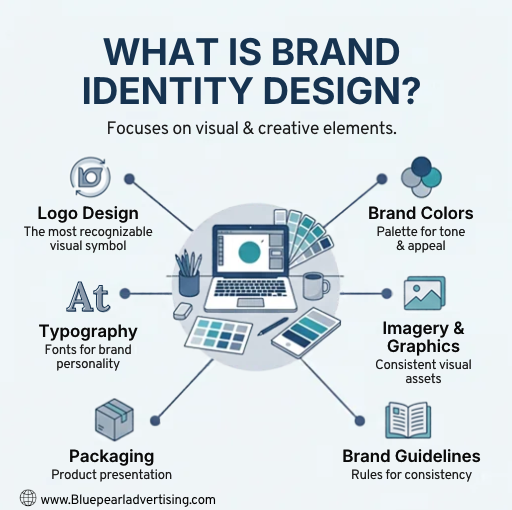
Table of Contents
What Is Brand Identity Design?
Brand identity design is the process of creating the visual and creative elements that represent a business. It includes everything from your logo and colour palette to typography, imagery, packaging, and other brand materials.
Think about the brands you recognize instantly. In many cases, you can identify them by their colours, symbols, or visual style before you even read their names. That familiarity comes from a consistent identity built over time.
An effective brand identity communicates who you are, what your business offers, and why customers should remember you. It also ensures that your brand looks professional and recognizable across different platforms, including websites, social media, advertisements, business cards, and packaging.
Why Is Brand Identity Important for Your Business?
First impressions matter, especially in a competitive market. When potential customers discover your business, your visual presentation can influence how they perceive your products or services.
A well-planned brand identity offers several benefits.
1. Creates a Strong First Impression
A professional visual identity helps your business appear credible and organized. When your logo, colours, and overall presentation work together, customers can develop a clearer understanding of your brand.
2. Makes Your Business Recognizable
Consistency helps customers recognize your business across different marketing channels. Over time, familiar visual elements can make your brand easier to remember.
3. Builds Customer Trust
Customers often feel more confident interacting with businesses that present themselves professionally. A consistent identity can support that confidence by making your business appear reliable and established.
4. Helps You Stand Out From Competitors
Your business needs more than a good product to capture attention. A distinctive identity helps communicate what makes your brand different and gives customers a reason to remember it.
The Key Elements of Effective Brand Design
Successful brand design brings several creative elements together to create a unified visual experience. Every element should support the same brand personality rather than compete for attention.
1. Logo Design
Your logo is often the most recognizable part of your brand. It should reflect your business personality, remain clear at different sizes, and work across both digital and printed materials.
A good logo does not need to be complicated. Sometimes, a simple and thoughtful design communicates a brand more effectively than an overly detailed one.
2. Brand Colours
Colours influence the overall appearance and emotional tone of a brand. For example, blue may communicate professionalism and reliability, while green can be associated with nature or sustainability.
The right colour palette depends on your industry, audience, and positioning. Consistent use of selected colours helps create a recognizable visual identity.
3. Typography
Fonts play an important role in how your brand communicates. Modern typography can create a clean and contemporary appearance, while more traditional styles may communicate elegance or heritage.
Choosing appropriate fonts for headings, body text, and marketing materials helps maintain a consistent brand experience.
4. Brand Guidelines
Brand guidelines explain how your visual identity should be used. They typically cover logo placement, colour codes, typography, spacing, imagery, and other design rules.
These guidelines help maintain consistency when different people create content or marketing materials for your business.
Branding Design: More Than Just Visuals
Many businesses assume that branding design is simply about creating a logo. In reality, branding involves a much broader process of defining how your business looks, sounds, and communicates with its audience.
Your brand personality, messaging, tone of voice, and customer experience all contribute to how people perceive your business.
For example, a premium jewellery brand may use elegant typography, refined colours, and sophisticated imagery to communicate luxury. A technology startup may prefer a modern visual style that emphasizes simplicity and innovation.
Neither approach is automatically better. The right direction depends on your business goals and the expectations of your target customers.
At Blue Pearl Advertising, the aim is to develop creative solutions that align visual design with your brand’s message, helping your business communicate more clearly and consistently.
Although they are closely connected, a logo and a complete brand identity are not the same thing.
A logo is a visual symbol or wordmark that identifies your business. Brand identity includes the logo along with the colours, typography, graphic elements, imagery, and design rules that create a consistent appearance.
Think of your logo as one important piece of a larger picture.
For example, a business might have an excellent logo but use different colours, fonts, and layouts across its website, social media, and advertisements. This inconsistency can make the brand feel disconnected.
With professional logo and brand identity design, all these elements work together to create a recognizable and cohesive brand experience.
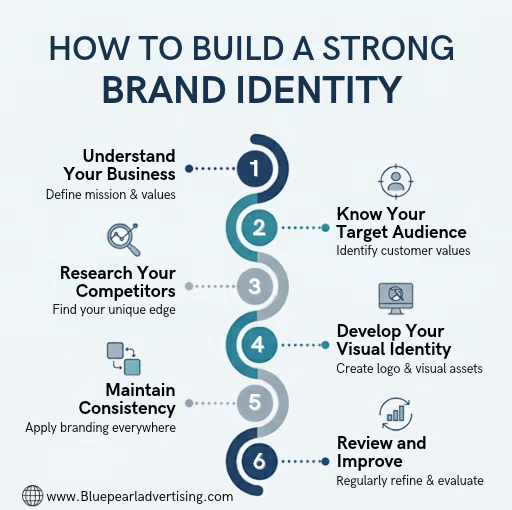
How to Build a Strong Brand Identity
Creating an effective brand identity requires planning, research, and creativity. Here are some essential steps to consider.
Step 1: Understand Your Business
Start by defining your mission, values, products or services, and long-term goals. Your identity should reflect what makes your business unique.
Step 2: Know Your Target Audience
Consider who your customers are, what they value, and what influences their purchasing decisions. Understanding your audience helps you choose a visual direction that feels relevant to them.
Step 3: Research Your Competitors
Explore how similar businesses present themselves. Look for opportunities to differentiate your brand without losing relevance within your industry.
Step 4: Develop Your Visual Identity
Create a logo, colour palette, typography system, and supporting design elements that work together. Each decision should have a clear purpose.
Step 5: Maintain Consistency
Apply your identity consistently across your website, social media, advertisements, packaging, presentations, and other customer touchpoints. Use brand guidelines to keep everything aligned.
Step 6: Review and Improve
As your business grows, your identity may need adjustments. Regularly review whether your branding still reflects your business and connects with your audience.
Why Choose Blue Pearl Advertising for Brand Identity Design?
Choosing the right creative partner can make the branding process more focused and effective. You need a team that understands your business goals, listens to your ideas, and turns them into a clear visual direction.
Blue Pearl Advertising helps businesses develop creative brand identities that support their marketing goals and communicate their personality. From logo concepts to cohesive visual branding, a thoughtful approach ensures that every design element contributes to the bigger picture.
Whether you are building a new business from the ground up or looking to refresh your existing image, investing in professional brand design can help you present your business with greater clarity and consistency.
Final Thoughts
Your brand is often the first conversation you have with a potential customer before you say a word. A clear, distinctive, and consistent identity helps people understand your business and remember what makes it different.
Effective brand identity design combines strategy, creativity, and consistency. From logo development to complete branding design, every element should work together to communicate your business’s values and vision.
At Blue Pearl Advertising, we believe that great branding starts with understanding your story and turning it into a visual identity that feels authentic to your business.
Ready to build a memorable brand? Connect with Blue Pearl Advertising and take the first step towards creating a professional identity for your business.




Leave a Reply